


How Support and Flexibility Transformed Transit for the Klamath Tribes

Client
Location
Population
Launch
Service
Goal
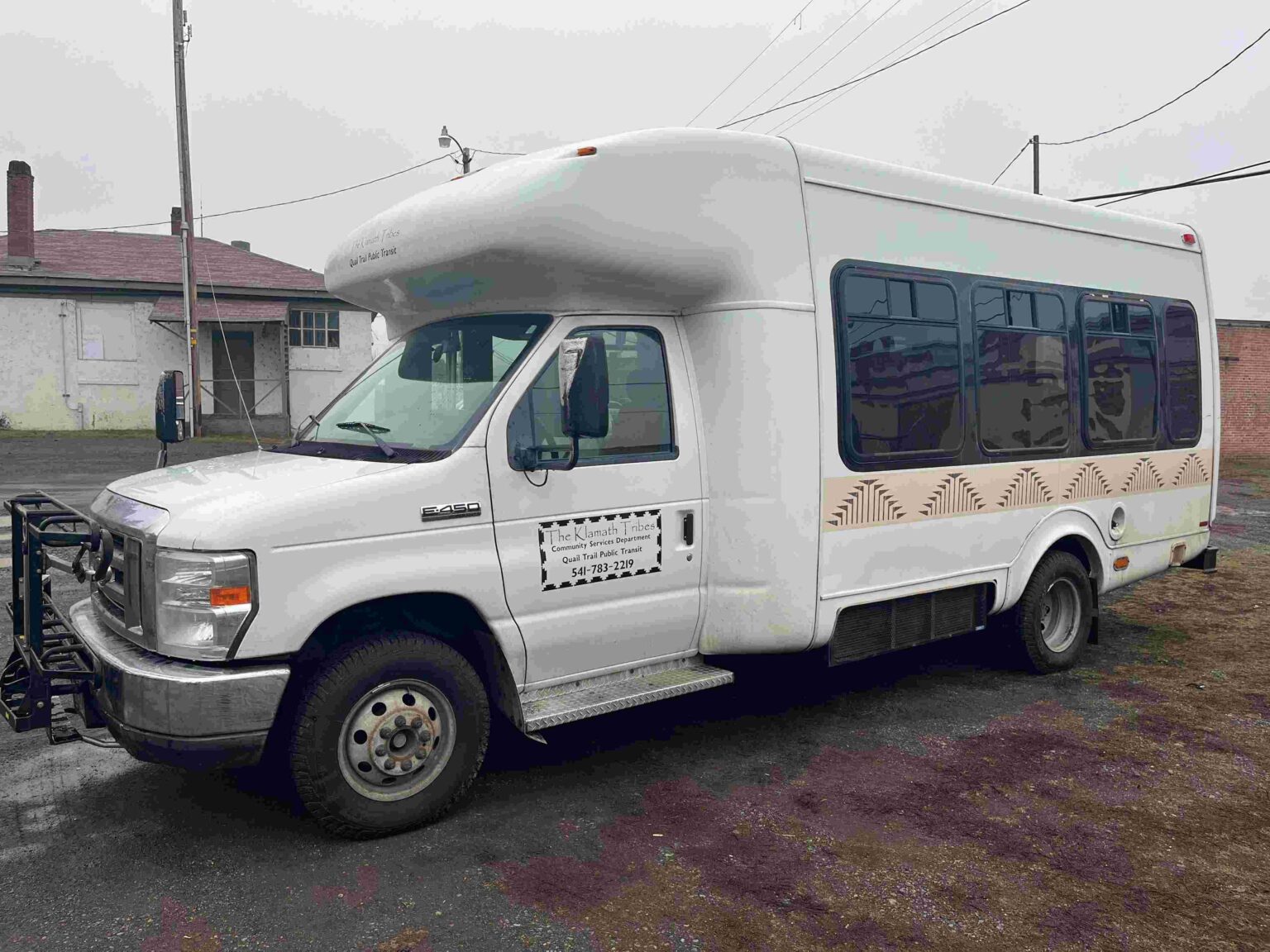
The Klamath Tribes operated the Quail Trail Bus, a fixed-route service that provided essential, fare-free transportation within the Chiloquin and Klamath Falls areas. As one of the few public transit options available in the region, the Quail Trail Bus played a crucial role in connecting community members to key destinations including health services, employment centers, and tribal facilities.
However, the fixed nature of the routes and schedules meant that flexibility was limited, and the system struggled to meet more dynamic transportation needs, such as medical appointments outside regular service hours or transportation to multiple meal sites across the region. This gap prompted the Tribes to seek a more adaptive and data-driven solution to enhance service coverage and improve access for riders across the community.
Challenges
Expensive software that didn’t work
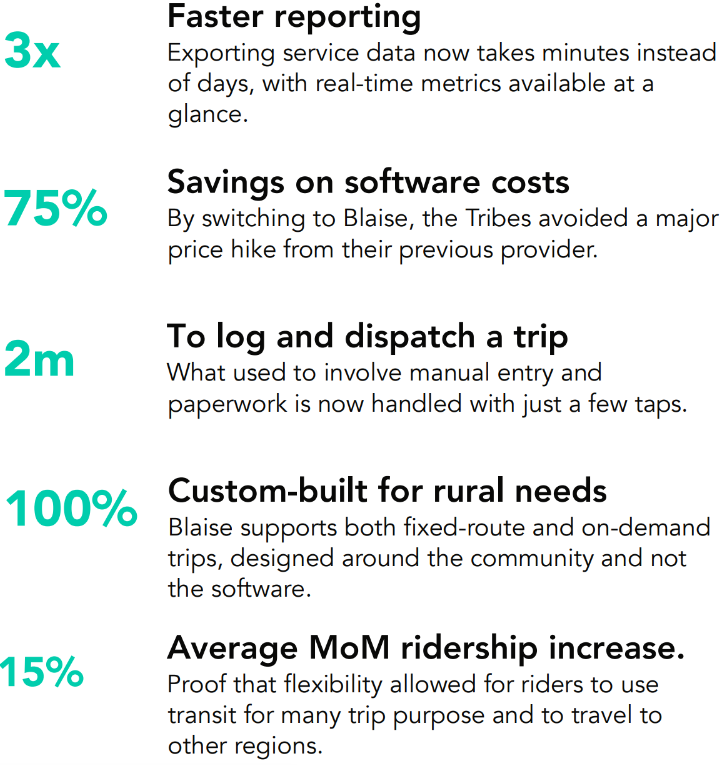
The previous scheduling software had become a financial and operational burden. As costs rose sharply, by nearly 75% annually, the platform failed to deliver proportional value. For a small, rural transit agency operating on limited budgets, this increase was unsustainable. More critically, the software was not intuitive for staff to use, often requiring significant time and effort to input trip data manually.
Limited flexibility of existing fixed-route
The Quail Trail Bus, while essential to the Klamath Tribes community, operated with limited flexibility. With one standard route running Monday through Friday and a second service offered only on Thursdays, the fixed schedule could not accommodate varying trip needs. As community needs evolved, it became clear that a more dynamic, rider-centric approach was necessary to provide equitable, reliable transportation.
Lack of support from a large, unresponsive vendor
The Klamath Tribes also faced ongoing challenges with their previous software provider’s lack of customer support and unwillingness to adapt to their needs. As a large, inflexible vendor, the company did not prioritize smaller clients like the Tribes, offering little in the way of hands-on assistance or product customization. Requests for feature improvements or support were met with slow responses, or ignored entirely. This created a disconnect between the service provider and the operational realities of rural transit, where localized, context-aware solutions are critical.
Our Solution
Personalized customer support
Blaise’s hands-on, collaborative approach played a key role in the successful rollout. From the very beginning, our team worked closely with the Klamath Tribes to align the platform with their operational goals and community priorities. Every client receives a dedicated account manager, with regular check-ins, ongoing support, and direct access to the service delivery team to ensure the platform continues to meet evolving needs.
Customized by community needs
Our platform is designed to flex with the needs of agencies like the Klamath Tribes. Whether automating trip scheduling or allowing staff to manually assign vehicles based on local knowledge, Blaise supports a hybrid operations model that respects both technology and human expertise. This mix of automation and control gives transit teams the freedom to run services their way.
Real-time data and reporting
Previously, generating service reports could take days. With Blaise, the Klamath Tribes now have access to real-time analytics and operational data via an easy-to-use dashboard. This shift empowers staff to monitor performance, respond quickly to changes, and make data-driven decisions that improve rider experience and service delivery.
Results
The transition to Blaise Transit’s platform empowered the Klamath Tribes to streamline operations, improve data accuracy, and deliver more responsive service to their community
"We were scared at first that it wasn’t what we wanted, but now we have scheduling software that’s doing exactly what we needed and then some. It was designed specifically for our small, rural area. Our drivers say it’s easier than doing all the paperwork, and we’re getting more accurate data than ever. This was one of the best things we’ve done for our Transit Agency." - Michelle Carson, Transit Program Manager, The Klamath Tribes
Join our growing network of sustainable transit!


